5 Best Water Filters That Actually Remove Microplastics (Tested & Certified)
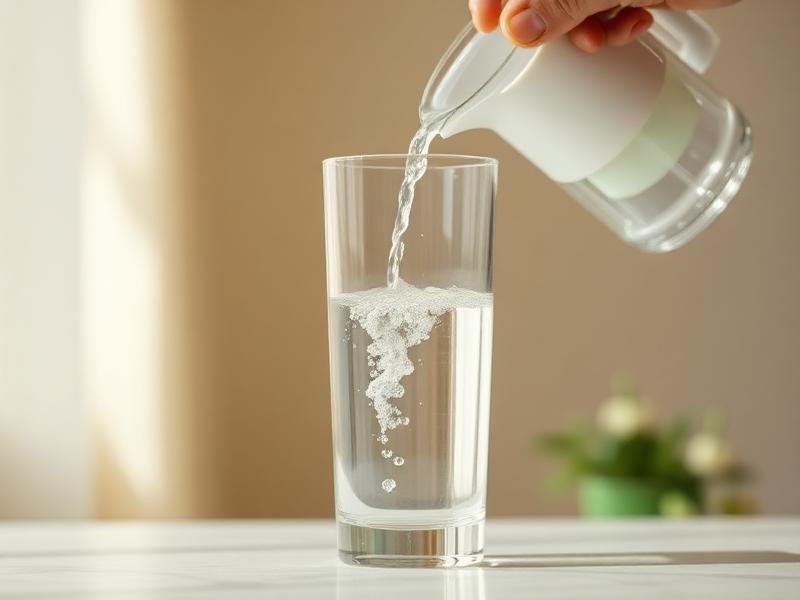
Most of us assume the filter in our fridge or pitcher is catching everything we'd rather not drink. But microplastics — and their even smaller cousins, nanoplastics — are often far finer than the coarse sediment and taste filters many households rely on. Particles measured in single microns or less can pass straight through standard granular media.
That doesn't mean the problem is unsolvable. Filtration science is well understood: dense carbon blocks and reverse osmosis membranes physically trap particles at these scales. The challenge is separating genuine performance from marketing language on the box.
The reassuring news is that independent testing exists. NSF/ANSI Standard 401 certifies filters for the reduction of emerging contaminants, including microplastics. Below, we've focused only on filters that are certified or independently tested to that standard — or that use Reverse Osmosis (RO) membranes fine enough to block particles outright — so you can choose with confidence.
At a glance: our top 5
Best for: Renters wanting RO without installation
Best for: Families wanting a simple fridge upgrade
Best for: Homeowners wanting filtered water on tap
Best for: Budget-conscious households already using Brita
Best for: Maximum filtration for larger households
In-depth reviews
While scanning a comparison table is helpful, choosing the right system for your home requires looking under the hood. Below, we break down the exact performance data, physical mechanics, and long-term costs of our top-rated systems so you can choose with absolute confidence.
AquaTru Classic
If your goal is to completely erase microplastics, nanoplastics, and chemical additives from your home's water supply without calling a plumber, the AquaTru Classic Countertop is the gold standard.
Unlike basic filter pitchers that rely on gravity, the AquaTru Classic uses a motorized, 4-stage ultra-reverse osmosis system. It forces tap water through an incredibly tight semi-permeable membrane rated at 0.0001 microns. Because microplastics are typically between 0.1 and 1 micron in size, they are physically blocked from reaching your glass.
Why It Wins
The AquaTru Classic doesn't just make claims; it has the testing to back them up. It is certified by IAPMO to NSF/ANSI Standards 42, 53, 58, and 401. This means it is independently proven to eliminate microplastics, lead, chromium-6, fluoride, and 14 distinct variations of PFAS "forever chemicals".
The unit features a redesigned, highly intuitive visual display panel that utilizes clear icons to track exact filter life, removing all guesswork from maintenance. It holds a generous 0.75 gallons of pure water in its rear tank, dispensing instantly at the press of a button.
- •Filter Lifespan: The RO membrane lasts up to 2 years (approx. 1,200 gallons), while the carbon filters require swapping every 6 months.
- •Approximate Upfront Cost: Around $475.
Pros
- True 4-stage reverse osmosis targets microplastics, nanoplastics, and 83+ severe contaminants
- Zero plumbing: Simply plug it into any outlet, fill the tank, and it goes to work
- Redesigned visual filter-life indicator display panel
Cons
- Takes up kitchen counter footprint space
- Utilizes plastic reservoir storage tanks
- Drops healthy trace minerals (requires liquid mineral drops)
Clearly Filtered Pitcher
If you live in an apartment, have minimal counter space, or want a system that tucks neatly into your refrigerator door, the Clearly Filtered Water Pitcher is the single best alternative to a complex filtration machine.
Most commercial pitchers only tackle basic taste and odor. Clearly Filtered breaks that mold by using proprietary Affinity® Filtration Technology. Instead of traditional coarse carbon granules, it forces water through a dense, sub-micron matrix composite that creates a tortuous path, trapping incredibly small particles.
Why It Wins
Clearly Filtered has been independently tested in accredited third-party laboratories to meet NSF/ANSI Standards 42, 53, 401, and 473. The data confirms that it targets and successfully filters out more than 99.99% of microplastics down to sub-micron scales, along with lead, glyphosates, and heavy metals.
The massive advantage this pitcher holds over standard Reverse Osmosis systems is that it is engineered to target harmful chemical bonds while allowing healthy, naturally occurring alkaline minerals (like calcium and magnesium) to pass through untouched.
- •Filter Lifespan: 100 gallons per filter (roughly 3 to 4 months of heavy daily family use).
- •Approximate Upfront Cost: Around $110.
Pros
- Delivers plastic-free hydration while retaining natural alkaline trace minerals
- Built entirely from 100% BPA/BPS-free, medical-grade Tritan plastic
- Independently tested to filter out more than 99.99% of sub-micron plastics
Cons
- Exceptionally dense matrix means a slower flow fill rate than standard pitchers
- Higher recurring cost per replacement cartridge filter
- Small fridge capacity means more frequent manual refills throughout the day
Aquasana Claryum 3-Stage
For households wanting clean, microplastic-free water running directly from a dedicated kitchen tap without losing beneficial trace minerals, the Aquasana Claryum 3-Stage is a top-tier choice. This system is installed neatly hidden out of sight right under your sink counter.
Unlike classic filters that strip everything out indiscriminately, Aquasana features proprietary Claryum® selective filtration technology. It targets microplastics, heavy metals, and chemicals while leaving naturally occurring, body-essential calcium, potassium, and magnesium intact.
Why It Wins
The system is WQA tested and certified to NSF/ANSI Standards 42, 53, and 401. Third-party testing confirms it removes 99.6% of all microplastics, 99.7% of toxic PFAS forever chemicals, and 78 other chemical contaminants. By featuring a dedicated 5-micron pre-filter, it catches coarse sediment and rust before the water enters the dense sub-micron blocks, preventing early clogging.
- •Filter Lifespan: Up to 600 gallons of treated water (roughly 6 months of heavy family use).
- •Approximate Upfront Cost: Around $175.
Pros
- Selective Claryum® filtration targets microplastics while keeping healthy minerals intact
- Dedicated 5-micron sediment pre-filter prevents clogging and extends main cartridge life
- Replaces thousands of single-use bottles with eco-friendly low-waste housings
Cons
- Requires basic DIY plumbing skills to install the custom secondary metal faucet
- Under-sink footprint takes up cabinet storage space near pipe lines
- Filter cartridges require simultaneous 3-stage swapping every 6 months
Brita Elite Filter
If you already own a standard Brita pitcher or dispenser, you do not need to buy an entirely new system to get plastic-free hydration. Upgrading your setup to the Brita Elite Filter provides an affordable entry point into certified microplastic reduction.
It is vital to note that standard Brita filters are not certified to reduce microplastics. Only the upgraded Elite line features the dense sub-micron carbon structural matrix needed to physically block micro-particulates.
Why It Wins
The Brita Elite is formally certified under NSF/ANSI Standard 401. This guarantees it successfully captures microplastics (defined as particles ranging tightly from 0.5 down to 1 micron) along with PFOA, PFOS, and lead. The long-lasting cartridge means significantly fewer filter swaps throughout the year compared to standard gravity filters.
- •Filter Lifespan: 120 gallons per cartridge (roughly 6 full months of everyday use).
- •Approximate Upfront Cost: Around $20–$25 per replacement filter (Fits standard Brita housings).
Pros
- Extremely affordable upfront cost with zero installation or complex setup required
- Impressive 6-month cartridge longevity requires far fewer manual changes per year
- Widely available in major retail stores for effortless replacement shopping
Cons
- Fails to remove tougher dissolved solids like fluoride or heavy nitrate contaminants
- Gravity pitcher housing is composed of plastic rather than premium glass or steel
- Slower filtration flow rate compared to standard, non-certified generic filters
Waterdrop G3P600
For homeowners who want an absolute powerhouse that treats water at lightning speed, the Waterdrop G3P600 is a premium under-sink system. It utilizes an advanced 8-stage tankless reverse osmosis (RO) process to filter water on-demand.
Traditional RO units require a large, bulky water storage tank that eats up your under-counter cabinet area. The tankless design of the G3P600 saves up to 70% of that space while preventing potential bacterial growth inside stagnant tanks.
Why It Wins
The G3P600 forces tap water through an absolute sub-micron semi-permeable membrane. Because reverse osmosis pore thresholds are significantly smaller than microplastics, it acts as an impenetrable wall to plastic debris, heavy metals, fluoride, and PFAS. It features a built-in smart LED faucet that communicates real-time water purity and filter lifespan directly at the point of use.
- •Filter Lifespan: The core RO membrane lasts up to 2 full years (approx. 2,400 gallons).
- •Approximate Upfront Cost: Around $400.
Pros
- Impermeable 0.0001-micron reverse osmosis membrane creates an absolute barrier to nanoplastics
- High-speed 600 GPD smart motorized pump fills an 8-ounce glass in under 8 seconds
- Tankless design saves 70% of under-sink space and eliminates stagnant water storage
Cons
- High initial upfront purchase price point and recurring multi-filter maintenance costs
- Requires an active electrical outlet and a hardwired wastewater drain line beneath the sink
- Strips out healthy natural minerals along with the bad contaminants
Buyer's Guide: How to Choose a Microplastic Water Filter
1. Filtration Technology Type
Reverse osmosis (RO) pushes water through a membrane with pores around 0.0001 microns — the most thorough option, capturing micro- and nanoplastics. Carbon block filters compress activated carbon into a dense solid; quality blocks rated at 1 micron or less offer excellent reduction without wasting water. Standard granular carbon, common in basic pitchers, improves taste but leaves gaps particles can slip through — check for an NSF 401 listing before relying on one.
2. Housing and Pitcher Materials
It makes little sense to filter out plastic only to store water in cheap, scratch-prone plastic. Look for BPA/BPS-free housings at minimum, and consider glass or stainless steel carafes for storing filtered water. Replace scratched or cloudy reservoirs over time.
3. Long-Term Cost of Ownership
The sticker price is only part of the story. Compare filter lifespans and replacement costs: pitcher filters may need changing every 2–6 months, under-sink carbon blocks around 6–12 months, and RO membranes up to 2 years. Divide the annual filter cost by gallons filtered to find your true cost per glass.
Frequently Asked Questions
What micron rating do I need?+
For meaningful microplastic reduction, look for a filter rated to 1 micron or less — ideally with NSF/ANSI 401 certification. Reverse osmosis membranes go much further, to roughly 0.0001 microns, which blocks particles down to the nanoplastic range.
Can the body get rid of microplastics?+
Research suggests the body excretes a portion of ingested particles, though smaller nanoplastics are still being studied. Reducing daily intake — especially from water — is the most reliable lever you control.
Is bottled water worse than tap?+
Several studies have found higher particle counts in bottled water, partly from the bottle and cap themselves. Filtered tap water in a glass or stainless bottle is typically the better, cheaper choice.
Do I need to panic?+
Not at all. Microplastics are a widespread issue, but you don't need to fix everything overnight. A certified filter is one calm, practical step — and every small swap adds up.
Conclusion
Clean water is one of the most meaningful, and most achievable, changes you can make for your family's health. Whether you start with a certified pitcher filter or go all-in with reverse osmosis, you're taking real control of what goes into your body every single day. There's no need for perfection — just choose the option that fits your home and budget, and build from there, one simple swap at a time.
Get the free 30-Day Starter Guide
One small swap per day. Join the newsletter and grab the PDF.
No spam. Unsubscribe anytime. We respect your inbox.